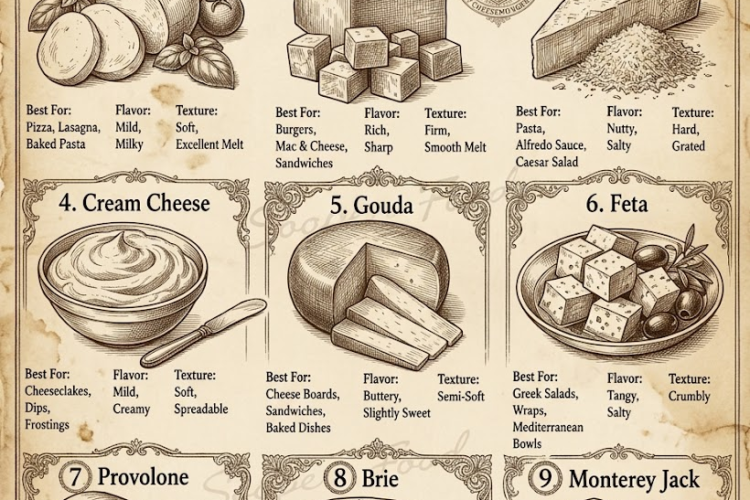
🧀 9 Cheeses Every Home Cook Should Know
Choosing the right cheese can completely transform the flavor, texture, and melt of your favorit
e recipes. From creamy cheeses for desserts to bold, aged varieties for pasta and sandwiches, these are the essential cheeses every home cook should know and keep on hand.
🧀 1. Mozzarella
Mozzarella is one of the most versatile cheeses, prized for its mild flavor and exceptional melting qualities.
Best For:
- Pizza
- Lasagna
- Baked pasta
- Stuffed breads
- Caprese salad
Flavor: Mild, fresh, and milky
Texture: Soft, moist, and stretchy when melted
Cooking Tips:
- Fresh mozzarella is ideal for salads and homemade pizza.
- Low-moisture mozzarella melts beautifully in baked dishes.
- Pat fresh mozzarella dry before using on pizza to prevent excess moisture.
🧀 2. Cheddar
Cheddar is a classic cheese with a rich flavor that becomes sharper as it ages.
Best For:
- Burgers
- Mac and cheese
- Grilled cheese sandwiches
- Casseroles
- Baked potatoes
Flavor: Rich, buttery, and sharp
Texture: Firm with excellent melting properties
Cooking Tips:
- Mild cheddar melts more smoothly than extra-sharp varieties.
- Freshly grated cheddar melts better than pre-shredded cheese.
- Combine with mozzarella for an extra creamy cheese sauce.
🧀 3. Parmesan
Parmesan is a hard Italian cheese known for its bold, nutty flavor and finely grated texture.
Best For:
- Pasta dishes
- Alfredo sauce
- Caesar salad
- Risotto
- Soups
Flavor: Nutty, salty, and savory
Texture: Hard and dry
Cooking Tips:
- Always grate fresh Parmesan for the best flavor.
- Parmesan rinds can be added to soups and sauces for extra richness.
- A small amount adds intense flavor to many dishes.
🧀 4. Cream Cheese
Cream cheese is a soft, smooth cheese commonly used in both sweet and savory recipes.
Best For:
- Cheesecakes
- Frostings
- Dips
- Bagels
- Creamy pasta sauces
Flavor: Mild and slightly tangy
Texture: Soft, creamy, and spreadable
Cooking Tips:
- Allow cream cheese to soften before mixing.
- Beat until smooth to avoid lumps.
- Use full-fat cream cheese for the richest texture.
🧀 5. Gouda
Gouda is a Dutch cheese with a buttery flavor that becomes richer as it ages.
Best For:
- Cheese boards
- Sandwiches
- Baked dishes
- Burgers
- Cheese sauces
Flavor: Buttery, creamy, and slightly sweet
Texture: Semi-soft and smooth
Cooking Tips:
- Young Gouda melts beautifully.
- Aged Gouda has a stronger flavor and works well on charcuterie boards.
- Pairs well with apples, pears, and nuts.
🧀 6. Feta
Feta is a traditional brined cheese known for its crumbly texture and tangy flavor.
Best For:
- Greek salads
- Wraps
- Mediterranean bowls
- Roasted vegetables
- Omelets
Flavor: Tangy, salty, and fresh
Texture: Crumbly and slightly creamy
Cooking Tips:
- Crumble just before serving for the freshest texture.
- Rinse lightly if a milder flavor is preferred.
- Delicious with olives, tomatoes, cucumbers, and herbs.
🧀 7. Provolone
Provolone is an Italian cheese that melts smoothly and has a mild smoky flavor.
Best For:
- Philly cheesesteaks
- Sub sandwiches
- Paninis
- Pizza
- Baked pasta
Flavor: Mild, buttery, and slightly smoky
Texture: Semi-hard with excellent melting ability
Cooking Tips:
- Slice thinly for sandwiches.
- Melts evenly without becoming greasy.
- Combines well with mozzarella and cheddar.
🧀 8. Brie
Brie is a luxurious French cheese with a creamy interior and a soft edible rind.
Best For:
- Cheese boards
- Crackers
- Fruit platters
- Baked Brie
- Appetizers
Flavor: Buttery, rich, and creamy
Texture: Soft interior with a delicate edible rind
Cooking Tips:
- Serve at room temperature for the best flavor.
- Bake until warm and gooey for an elegant appetizer.
- Pairs wonderfully with honey, nuts, and fruit preserves.
🧀 9. Monterey Jack
Monterey Jack is a mild American cheese that melts exceptionally well.
Best For:
- Quesadillas
- Nachos
- Mexican dishes
- Tacos
- Cheese dips
Flavor: Mild, buttery, and creamy
Texture: Smooth, semi-hard, and excellent for melting
Cooking Tips:
- Ideal for creamy cheese sauces.
- Mix with cheddar for richer flavor.
- Perfect for recipes that require smooth, stretchy melted cheese.
🧀 Cheese Storage Tips
- Store cheese in the refrigerator wrapped in cheese paper, parchment paper, or wax paper before placing it in a loose plastic bag or airtight container.
- Keep cheeses away from foods with strong odors, as they can absorb surrounding aromas.
- Allow hard cheeses to come to room temperature for 20–30 minutes before serving to enhance their flavor.
- Always use a clean knife when slicing cheese to help preserve freshness.
- Freeze only hard cheeses if necessary, as soft cheeses may lose their texture after thawing.